


Thermal insulation components are composed of high-performance elastomer insulation material with a special film as the base material.
Thermal pads are available in different types: silicone (insulated), non-silicone, and carbon fiber (with also electrical conductivity)-Thermal conductivity value from 2 W/mk to 40 W/mk.

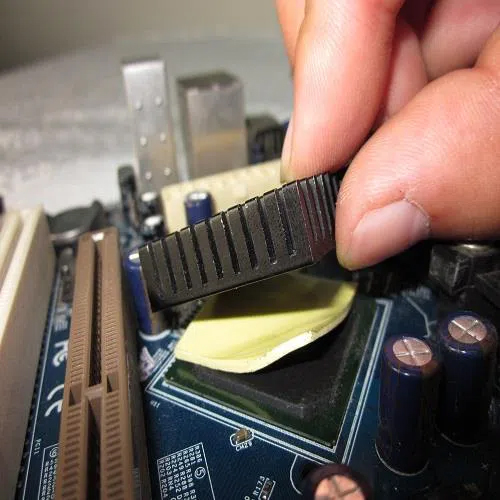

Silicone thermal pads
Stable physical properties, strong product toughness, good resilience, not easy to tear and puncture. 12 W/mk heat-conductive sheet does not deform.
The highest thermal conductivity can reach 12 W/MK.

Non Silicone thermal pads

Carbon fiber thermal pad
Carbon fiber thermal pads have the advantages of low density and good durability. Carbon fiber is an anisotropic and thermally conductive material with excellent thermal conductivity in the thickness direction.
The thermal conductivity is 40W/mk, the minimum thickness is 0.5 mm, and an adhesive can be arranged on one side or both sides.
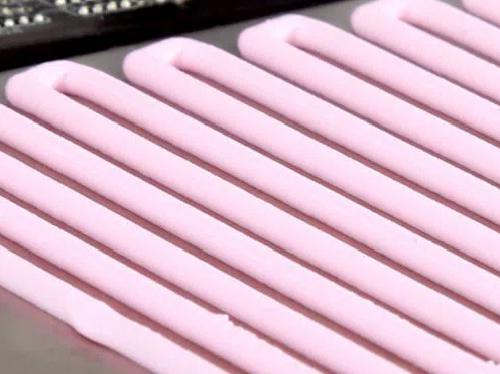
Thermal gel
Thermal gel is a soft single-component thermally conductive silicone-based gap-filling material with high thermal conductivity, low interfacial thermal resistance, and good thixotropy.
It is used between electronic components by reducing their thermal resistance and temperature, thus extending the life of electronic components and improving their reliability.

Auto-adhesive thermal tape
Auto-adhesive thermal tape for led is widely used to bond heat sink to microprocessor and other power-consuming semiconductors.
With its high adhesive strength and low thermal resistance, it can effectively replace silicone grease and mechanically fixed.
- Power Batteries
- Navigators
- Precision optical equipment, photographic equipment
- Laptop computers
- Mobile and communications equipment
- Automotive engine control equipment
- High-end industrial control and medical electronics


